
Architecture of Modern iGaming Platforms: From RNG Algorithms to Live Video Streaming
Architecture of Modern iGaming Platforms: From RNG Algorithms to Live Video Streaming
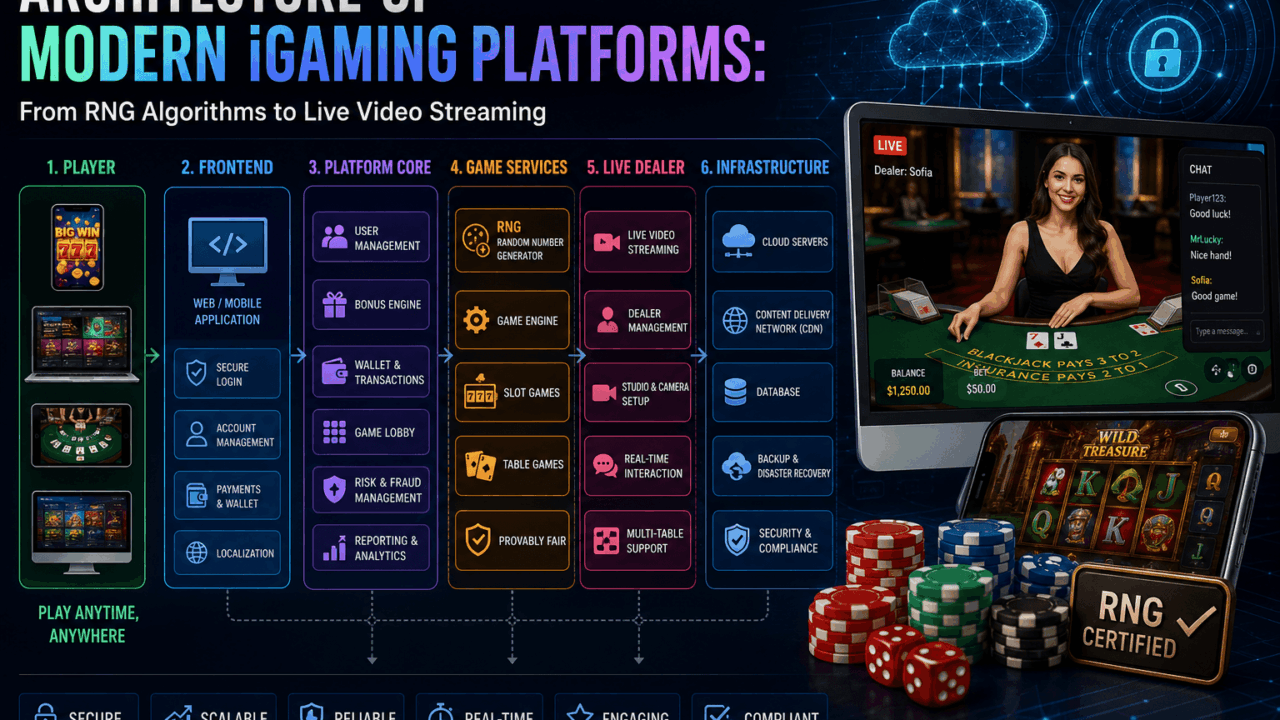
The digital entertainment industry has undergone a profound technological transformation over the past five years. Moving away from legacy monolithic systems in favor of microservice architectures has enabled online gaming platforms to achieve high scalability, minimal response latency, and secure processing of high-volume financial transactions. A modern gaming web infrastructure represents a complex ecosystem combining distributed databases, software provider integration APIs, cryptographic result verification protocols, and low-latency video streaming servers.
Advancements in HTML5 web technologies have eliminated the need for third-party browser plugins, establishing cross-platform compatibility as an industry default. This allows platforms to deliver consistent performance across desktop workstations and mobile devices with limited computational capacity. For system architects, the primary challenge lies in balancing workloads between client-side rendering engines and backend server infrastructure to guarantee uninterrupted service during sudden traffic spikes.
Traffic Routing, Edge Computing, and Digital Catalog Organization
Technological adaptation across digital entertainment platforms requires operators to implement dynamic content routing that segments incoming traffic based on geographic origin, device specifications, and user category preferences. Utilizing microservice architectures allows request-handling systems to construct personalized lobby views dynamically and optimize graphic asset delivery through content delivery networks (CDNs). Edge server caching minimizes initial lobby load times to sub-1.5-second thresholds while isolating user session management from payment processing services.
When segmenting regional player preferences across localized markets, platforms organize game lobbies around popular categories such as video slots, table games, and instant crash titles. Operators structuring high-concurrency content portals frequently implement localized navigational hubs like desi play online casino games to route users directly to certified software catalogs from providers such as Jili, Pragmatic Play, and Spribe without unnecessary middleware redirects. This precise routing architecture minimizes bounce rates, preserves session states across unstable mobile connections, and ensures strict logging of every API event in compliance with PCI DSS standards.
Slot Mathematics: Random Number Generation, RTP, and Volatility Profiles
At the core of every certified video slot lies a random number generator (RNG). Modern platforms employ either hardware-based true random number generators (TRNGs) or cryptographically secure pseudo-random number generators (PRNGs), rigorously audited by independent testing laboratories such as eCOGRA, iTech Labs, and GLI. These mathematical algorithms ensure complete statistical independence for every individual spin, rendering historical outcomes irrelevant to future results.
The primary metrics governing slot behavior are Return to Player (RTP) percentage and mathematical variance (volatility). Theoretical RTP typically ranges between 94% and 98%, calculated across statistical samples of millions of simulation cycles. Volatility defines the distribution and frequency of payouts:
- Low volatility: frequent, smaller payouts that stabilize balances over extended sessions with lower risk of balance depletion;
- High volatility: extended sequences without wins compensated by significantly higher potential multipliers, requiring operators to manage liquidity reserves tightly.
Server Load Dynamics in Cascade and Megaways Mechanics
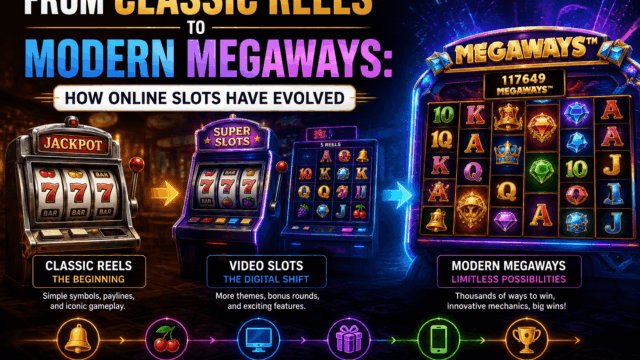
Modern video slots extend beyond static grid formats. Mechanics such as Megaways, cascading symbol collapses (Avalanche/Tumble), and direct feature purchases introduce dynamic computational loads on mathematical servers. When a single spin initiates a chain reaction of consecutive symbol evaluations and multiplier accumulations, backend engines must calculate each state mutation instantly and transmit updated game states to the client interface without latency spikes or state desynchronization.
| Game Category | Average RTP | Primary Calculation Mechanics | Compute Load Requirements |
|---|---|---|---|
| Classic Slots | 95.0% – 96.5% | Fixed payline paytables, PRNG seed generation | Low (static matrix evaluation) |
| Megaways / Cascading | 96.0% – 97.2% | Dynamic reel height, recursive tumble evaluations | Medium (sequential multi-step calculations) |
| Crash / Instant Games | 96.5% – 97.5% | Provably Fair SHA-256 seed combination | High (real-time sub-second sync) |
| Live Dealer Games | 97.0% – 99.5% | Optical Character Recognition (OCR), physics-based outcomes | Very High (ultra-low latency video + state engine) |
Provably Fair Protocols in Instant and Crash Gaming
The rise of instant crash games, such as Aviator and JetX, introduced a paradigm shift toward transparent, client-verifiable game outcomes. These titles operate on Provably Fair cryptographic algorithms built upon SHA-256 hashing protocols, eliminating operator manipulation of round multipliers.
The cryptographic sequence operates transparently across four key steps:
- The server generates a Server Seed and transmits its hashed representation to the client before the round commences.
- Client devices belonging to the first three players placing bets generate unique Client Seeds.
- The server merges the Server Seed with the combined Client Seeds to generate a final SHA-256 hash string determining the exact crash multiplier.
- Players can input the publicly disclosed seed values into independent SHA-256 calculators after the round to verify mathematical fairness independently.
Live Dealer Infrastructure: Video Ingestion and Optical Character Recognition
Live dealer sections impose the most stringent demands on network infrastructure and streaming throughput. Unlike software-driven RNG titles, live dealer games rely on physical equipment operated by professional dealers in specialized studio environments. Key technology here is Optical Character Recognition (OCR).
High-definition camera arrays capture physical events, such as roulette wheel revolutions or card distribution. Integrated OCR software analyzes video frames in real time, converting physical card symbols and wheel pocket numbers into digital data payloads transmitted to the calculation module. By leveraging WebRTC streaming protocols, video transmission latency is reduced to 200–500 milliseconds, enabling synchronized betting windows, instant payout settlements, and seamless interactive chat functionality.
Security Infrastructure, DDoS Mitigation, and Compliance Standards
Maintaining operational continuity across iGaming infrastructure requires robust cyber defense mechanisms. Because gaming platforms represent high-value targets for distributed denial-of-service (DDoS) attacks and automated bot exploitation, operators deploy multi-layered defense frameworks.
Traffic scrubbing networks, such as Cloudflare and Akamai, filter malicious volume at Layers 3, 4, and 7 of the OSI model. TLS 1.3 encryption protocols safeguard sensitive user credentials and financial transactions in transit. Concurrently, machine learning-driven anti-fraud systems monitor betting patterns in real time, identifying irregular activity and automated scripts without disrupting legitimate traffic flows.
The Operational Reality of Scalable Entertainment Architectures
Sustained success in modern platform engineering depends on the seamless integration of distributed microservices, cryptographically audited game logic, and ultra-low-latency data pipelines. As player expectations shift toward instant settlement, provable fairness, and high-definition interactive streaming, backend infrastructure must continually evolve to deliver flawless reliability under extreme concurrency.

About the author
Kenji Tanaka
Senior Reporter, Asia-Pacific · JD/MBA · former JFSA counsel · 8 years
Senior reporter covering Asia-Pacific crypto markets, DeFi, and digital-asset regulation.
More about Kenji Tanaka → Hide details ↑
Senior reporter covering Asia-Pacific crypto markets, DeFi, and digital-asset regulation. Eight years across financial journalism and regulatory law. Previously a regulator-side counsel inside Japan's Financial Services Agency (JFSA) where he worked on stablecoin guidance and crypto-asset disclosure rules, and a legal reporter at Nikkei Asia covering financial enforcement. Reads filings and on-chain governance proposals so you do not have to. Member of the Japan Crypto-Asset Business Association and the Hong Kong Society of Financial Analysts.
- Experience:
- 8 years covering markets
- Beat:
- DeFi protocols · Crypto regulation (APAC) · Stablecoin policy · On-chain governance
- Prior work:
- Nikkei Asia · Japan FSA (regulator-side counsel) · Mori Hamada & Matsumoto (capital markets / fintech)
- Education:
- JD, University of Tokyo Faculty of Law · MBA, Hitotsubashi ICS · BSc, Keio University
- Certifications:
- Bar-registered (Japan) · CFA Level III candidate
- Memberships:
- Japan Crypto-Asset Business Association · Hong Kong Society of Financial Analysts
- Based in:
- Hong Kong / Tokyo
- Languages:
- Japanese · English · Mandarin (working)
Editorial standards · Fact-checked against named sources. Reporters cannot trade securities they cover. Guidelines · Methodology · Report an error