
CFTC Files Lawsuit Against New Mexico Over Prediction Market Jurisdiction Issues
CFTC sues New Mexico over prediction market jurisdiction, escalating a federal-state conflict impacting Kalshi and similar platforms.
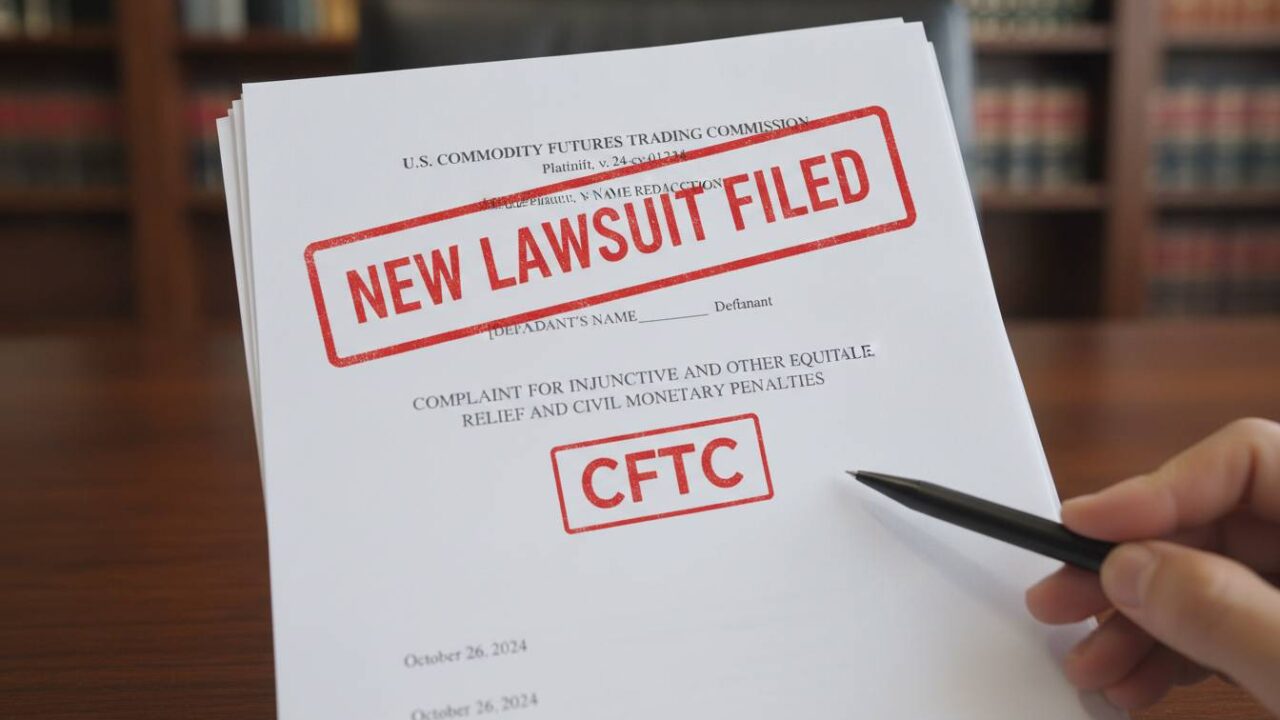
A federal lawsuit from the Commodity Futures Trading Commission (CFTC) now targets New Mexico, escalating an already heated clash over prediction markets that’s spilled into at least sixteen states. In its formal complaint, the CFTC claims it’s got exclusive authority to regulate exchanges like Kalshi—yet states including New Mexico keep trying to brand these platforms as illegal gambling.
The CFTC Chair said federally regulated exchanges fall under the agency’s jurisdiction.
Industry players say this federal movement has already shaped the future not just for prediction markets but for crypto innovations too. With lawsuits on the rise, regulators on both sides are watching Kalshi’s case as a possible turning point.
At the center of this conflict is a big legal question: does the Commodity Exchange Act give the CFTC complete regulatory control over prediction markets—where users bet on real-world events—or do individual states still get to classify these as gambling? The CFTC insists federally designated markets like Kalshi should answer only to its rules, arguing that state interference disrupts a unified regulatory framework. In fact, the push from New Mexico and similar states to label event contracts as gambling has sparked concern that states are stepping into what’s supposed to be the CFTC’s “exclusive jurisdiction.”
That battle over jurisdiction, which now involves at least sixteen states according to federal filings, suggests the stakes are much higher than one company’s future. Analysts point out that, if courts side with the CFTC, prediction market operators could eventually sidestep fifty state gambling codes and instead operate under a single federal standard—redefining the business model nationwide.
The Trigger: Kalshi and State Enforcement Actions
The tension intensified after New Mexico cracked down on Kalshi, a CFTC-registered exchange, by labeling its online event contracts as unlicensed sports betting. State law in New Mexico still permits sports wagers only inside physical casinos, cutting off legal avenues for internet-based betting providers. By offering online sports betting, Kalshi directly challenged these rules—prompting a wave of legal battles as more states either introduce or pass legislation asserting their own authority.
Federal Litigation and Legal Impact
Litigation now spans multiple states, all on the defense. The most recent lawsuit puts New Mexico as lawsuit number eight in this series. Legal professionals explain these actions are a calculated move to establish a formal judicial precedent—proving that federally registered prediction markets, under the CFTC’s supervision, aren’t subject to state gambling regulation.
These lawsuits—all filed in federal courts—directly challenge the states’ power to enforce gambling laws on event contracts. According to the CFTC’s filings, federal law gives the Commission exclusive oversight of derivatives and event-driven venues.
Looking Ahead: Legal Precedent and Industry Strategy
If federal judges confirm that the Commodity Exchange Act preempts state gambling laws for authorized event contracts, prediction markets like Kalshi could finally operate in any state without fearing local shutdowns.
However, legal experts warn that if even a few courts side with state-level enforcement, then platforms could become legal in some states but off-limits in others, leading to a fragmented market.
Political and Regulatory Backdrop
This new wave of CFTC lawsuits signals a broader shift: federal officials and prosecutors are working in lockstep to favor nationwide clarity over patchwork regulation, especially for financial innovation in fintech and digital assets.
Those state approaches—which stem from long-standing restrictions—have set up a direct clash with the CFTC’s more modern, unified style of supervision. As more states react to the lawsuit against New Mexico, experts think parallel legal challenges could force Congress to rethink national gambling laws or broker a compromise between state and federal regulators. One thing’s certain: so long as prediction markets, sports betting, and crypto-adjacent derivatives keep gaining national traction, the stage is set for more litigation and, eventually, a Supreme Court decision that could change industry strategy nationwide.

About the author
Marcus Webb
Chief Macro Economist
Chief Macro Economist covering Federal Reserve policy, treasury markets, and global macroeconomic trends.
More about Marcus Webb → Hide details ↑
Chief Macro Economist covering Federal Reserve policy, treasury markets, and global macroeconomic trends. Former Federal Reserve researcher and economist at Goldman Sachs Global Investment Research. PhD in Economics from MIT. Fifteen years of experience analyzing monetary policy impacts on financial markets.
- Beat:
- Federal Reserve · Interest rates · Treasury markets · Global macro · Currency policy
- Education:
- MIT · PhD Economics
- Certifications:
- PhD, CMT
- Memberships:
- American Economic Association · NABE
Editorial standards · Fact-checked against named sources. Reporters cannot trade securities they cover. Guidelines · Methodology · Report an error