
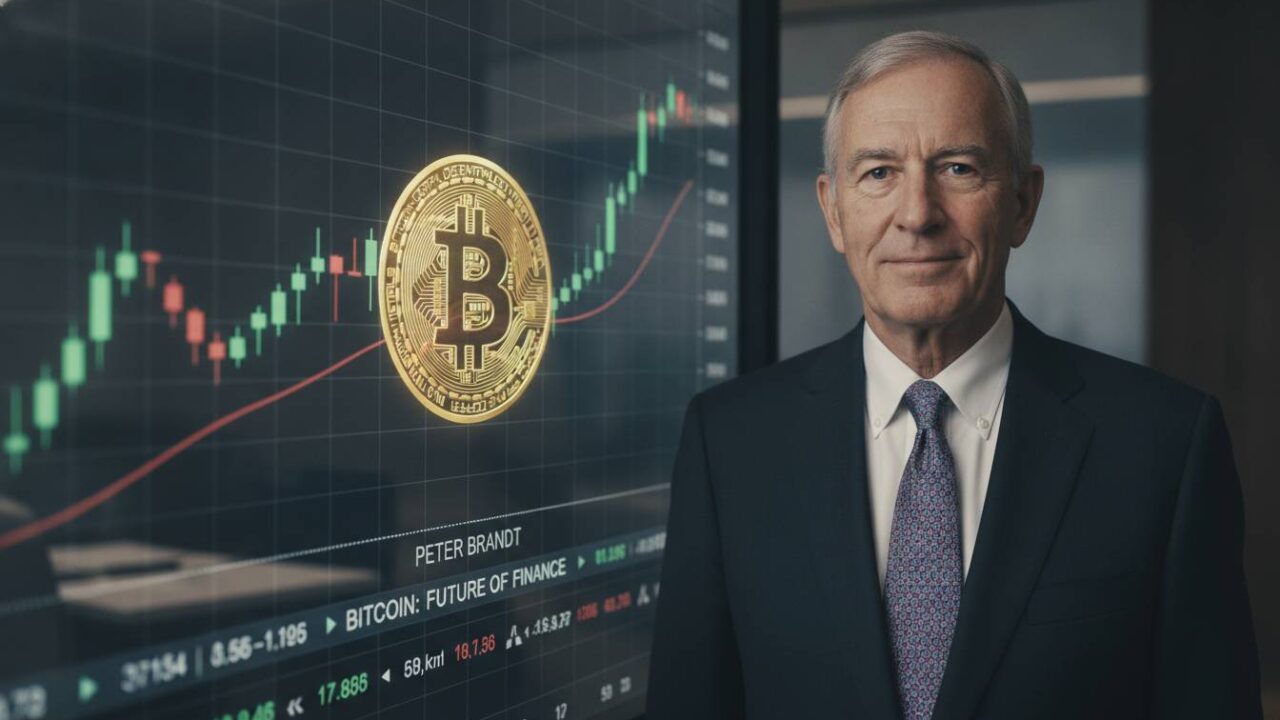
Where Peter Brandt Sees Bitcoin Heading Next
See where Peter Brandt sees Bitcoin price heading next, key resistance and support levels, and top risks per Newsnow, Crypto, and U.
This article is for informational purposes only and does not constitute financial or investment advice. Cryptocurrency markets are highly volatile. Always do your own research before making any investment decisions.
Bitcoin’s at a real crossroads—and veteran analyst Peter Brandt thinks the next major move will depend on whether resistance at $68,000 holds or breaks. That $66,000 mark, which is almost 3% higher in just 24 hours, shows just how fast markets can pivot when macro sentiment brightens. And with price action slamming into a wall near $68,000, the market could turn either way fast. Brandt’s scenarios paint a dramatic picture, with everything from a possible 15% plunge to a frenzied rally up to $127,500 if the bulls suddenly seize control.
Scenarios: The Cases for Upside and Downside Moves
Brandt’s technical road map—outlined by Newsnow—points to two distinctly different paths for Bitcoin. If support fails, the downside’s in play. A decisive breach could rattle confidence and wipe out recent gains quickly.
That said, Brandt’s bullish scenario hinges on Bitcoin pushing through the $68,000 resistance “with conviction,” which would open up far higher territory. Data from such a move needs robust volume and persistent whale accumulation. Since resistance around $66,000–$68,000 keeps blocking breakout attempts, traders can’t bank on the move just yet.
Macro Factors Events Driving Bitcoin’s Volatility
When headlines hit last week about a U.S.-Iran peace agreement, Bitcoin’s price soared—climbing above $65,500 as oil prices slid and inflation worries cooled.
Those forces—from regulatory rumors and ETF demand swings to sudden market shifts from big institutional players—show how macro shocks fuel quick pivots in expectations. For example, early June’s sharp drop from $71,300 underscored just how fast sentiment can sour if key conditions disappoint or technical breakdowns hit at major resistance levels. So the next non-crypto shock—like a surprise rate change or new regulatory move—could prove decisive. Whether traders see $68,000 as a brick ceiling or a launchpad will hinge on those outside triggers.
Whale Activity, Exchange Flows, and Market Structure
CryptoQuant data shows that “whale” selling—the big wallets offloading Bitcoin—dropped off after frantic distribution during early June’s sell-off. This decrease helped Bitcoin firm up above $65,000 and tamped down the wild daily swings that had been rattling retail traders.
But whale buying can’t carry a new rally on its own. Strong inflows from the wider market are needed to propel a true uptrend, especially across major spot exchanges. The delicate balance between coins heading to cold storage—often seen as bullish for price—and increased exchange inflows from sellers puts the brakes on really big moves, whether up or down.
The Bottom Line: Bitcoin’s Direction Remains Unsettled
After wild swings between $63,800 and $71,300, Bitcoin’s perched at a decisive threshold. Traders aren’t just watching the $68,000 resistance and $60,000 support—they’re analyzing each tiny fluctuation around these levels, searching for every possible edge. Significant upside or downside remains tied to a stubborn web of technical and macro factors.
Institutional inflows, clearer regulations, and the next wave of whale maneuvers will likely decide things. For close-up detail on the key price levels and technical signals to watch this month, check out Bitcoin Price Prediction For June 9: Analyst Targets. In the end, the months ahead will test the conviction of both bulls and bears as Bitcoin’s next big decision point draws near.

About the author
Marcus Webb
Chief Macro Economist
Chief Macro Economist covering Federal Reserve policy, treasury markets, and global macroeconomic trends.
More about Marcus Webb → Hide details ↑
Chief Macro Economist covering Federal Reserve policy, treasury markets, and global macroeconomic trends. Former Federal Reserve researcher and economist at Goldman Sachs Global Investment Research. PhD in Economics from MIT. Fifteen years of experience analyzing monetary policy impacts on financial markets.
- Beat:
- Federal Reserve · Interest rates · Treasury markets · Global macro · Currency policy
- Education:
- MIT · PhD Economics
- Certifications:
- PhD, CMT
- Memberships:
- American Economic Association · NABE
Editorial standards · Fact-checked against named sources. Reporters cannot trade securities they cover. Guidelines · Methodology · Report an error