Abracadabra Acts Quickly as MIM Stablecoin Depeg Intensifies
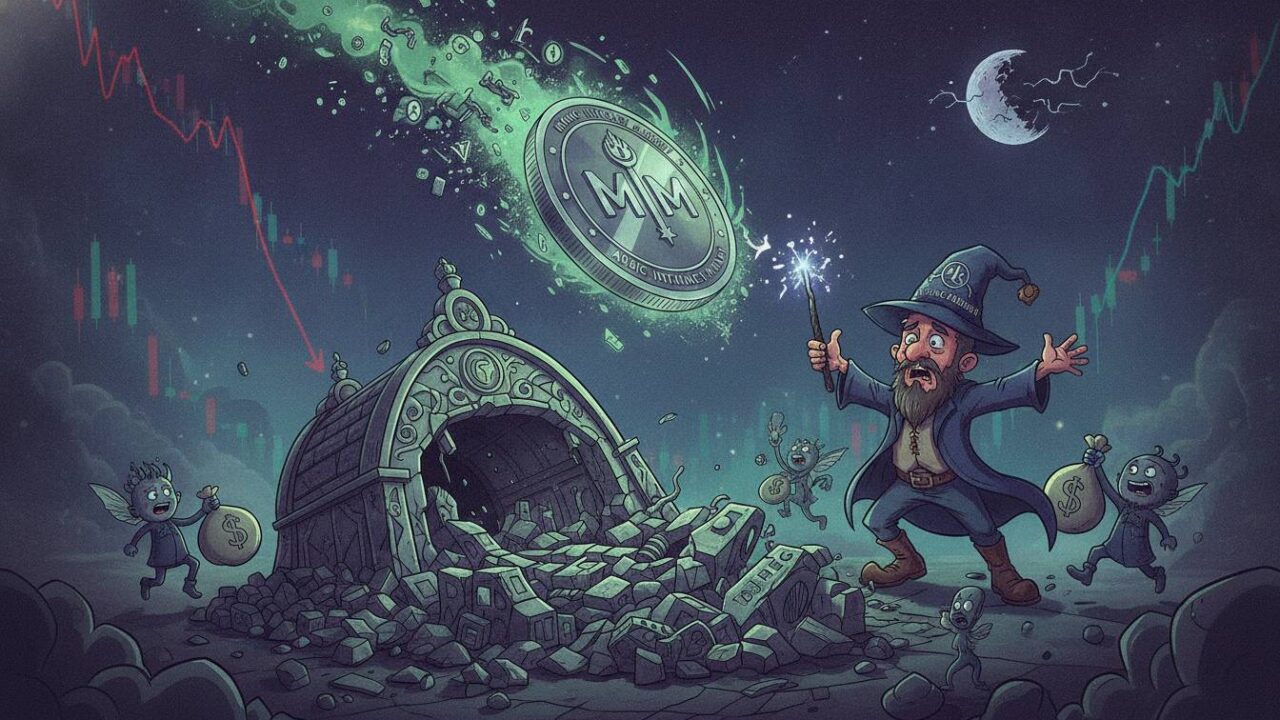
Abracadabra takes emergency action as MIM stablecoin depeg worsens to $0.8232 amid growing liquidity concerns in June 2026.
This article is for informational purposes only and does not constitute financial or investment advice. Cryptocurrency markets are highly volatile. Always do your own research before making any investment decisions.
Magic Internet Money (MIM), the stablecoin issued by the Abracadabra protocol, has sharply depegged to about $0.8232, reflecting an 18% drop from its intended $1 peg, according to Cryptorank’s report. This sharp decline marks a critical point for the token since stablecoins rely on their steady $1 value to keep user trust and ecosystem health. Abracadabra responded with emergency steps designed to boost liquidity and bring MIM back to its peg, as the intensity of this depeg points to deeper liquidity pressures within the protocol’s ecosystem. These pressures threaten the token’s role as a reliable medium of exchange and store of value within DeFi markets.
The root cause of MIM’s worsening depeg ties directly to a sudden liquidity drain, with about $100,000 shifted in MIM, USDT, and USDC into the Curve pool, as Cryptorank tracked. This movement shows how quickly liquidity providers (LPs) pulled out, fearing more losses. To fight this, Abracadabra’s team proposed a governance vote to add a MIM-2Pool gauge on Curve Finance, aiming to incentivize LPs by boosting liquidity mining rewards with roughly 140 million SPELL tokens dedicated to attracting fresh capital. LPs responding to incentives is key to easing these tensions.
Before this measure, Crypto News reported MIM traded between $0.871 and $0.874 across several chains in just 24 hours, representing an 11% drop within that timeframe alone.
The Current State of MIM
Looking at MIM’s market price evolution in June 2026, its value fell as low as $0.8232, worse than the $0.87 lows reported on June 12 by Bitget. This shock dented traders’ trust in MIM’s collateral and redemption systems. Abracadabra’s governance and liquidity token, SPELL, also saw heightened volatility during the crisis, which complicates recovery efforts. The drop started quickly and now seems persistent beyond initial market reactions.
— Sui (@SuiNetwork) June 17, 2026
While MIM isn’t algorithmic in the strict sense, its collateral rules and reliance on SPELL for liquidity make it vulnerable to similar risks that affected algorithmic stablecoins.
Implications for DeFi Liquidity and User Confidence
The MIM depeg has big ripple effects on DeFi ecosystems since MIM serves as a collateral and trading stablecoin. Abracadabra’s liquidity efforts highlight how fast confidence can vanish when a stablecoin dips below its peg, reducing its usefulness as a safe value benchmark. With MIM trading far below $1, users face greater risk and are pushed to cut exposure or arbitrage premium markets — actions that can worsen price swings, according to Cryptorank.
Persistent instability could push liquidity providers to pull more funds, shrinking market depth and causing bigger price swings. The planned issuance of 140 million SPELL tokens to strengthen Curve liquidity pools aims to stop this downward spiral by linking token rewards directly to the market.
Context from Previous Stablecoin Crises
Comparing MIM’s crisis with past stablecoin disruptions sheds light on possible outcomes and fixes. Multiple liquidity injections have previously restored depegged stablecoins to near par, showing that market moves can help if capital and trust are rebuilt.
However, figures show that lasting peg breaks often damage community trust and capital inflows seriously. Attempts to deploy large buybacks below $0.99 can soften prices but need time to take effect.
Future Outlook and Governance Watch
Market watchers are now focused on the upcoming Curve Finance governance vote about the MIM-2Pool gauge. The vote’s outcome will likely determine how well liquidity incentives can take hold, according to CoinMarketCap’s coverage.
MIM’s trading price slid from nearly $0.92 earlier in June to roughly $0.8232 by June 25, delivering a serious blow to holders and liquidity providers.

About the author
Marcus Webb
Chief Macro Economist
Chief Macro Economist covering Federal Reserve policy, treasury markets, and global macroeconomic trends.
More about Marcus Webb → Hide details ↑
Chief Macro Economist covering Federal Reserve policy, treasury markets, and global macroeconomic trends. Former Federal Reserve researcher and economist at Goldman Sachs Global Investment Research. PhD in Economics from MIT. Fifteen years of experience analyzing monetary policy impacts on financial markets.
- Beat:
- Federal Reserve · Interest rates · Treasury markets · Global macro · Currency policy
- Education:
- MIT · PhD Economics
- Certifications:
- PhD, CMT
- Memberships:
- American Economic Association · NABE
Editorial standards · Fact-checked against named sources. Reporters cannot trade securities they cover. Guidelines · Methodology · Report an error